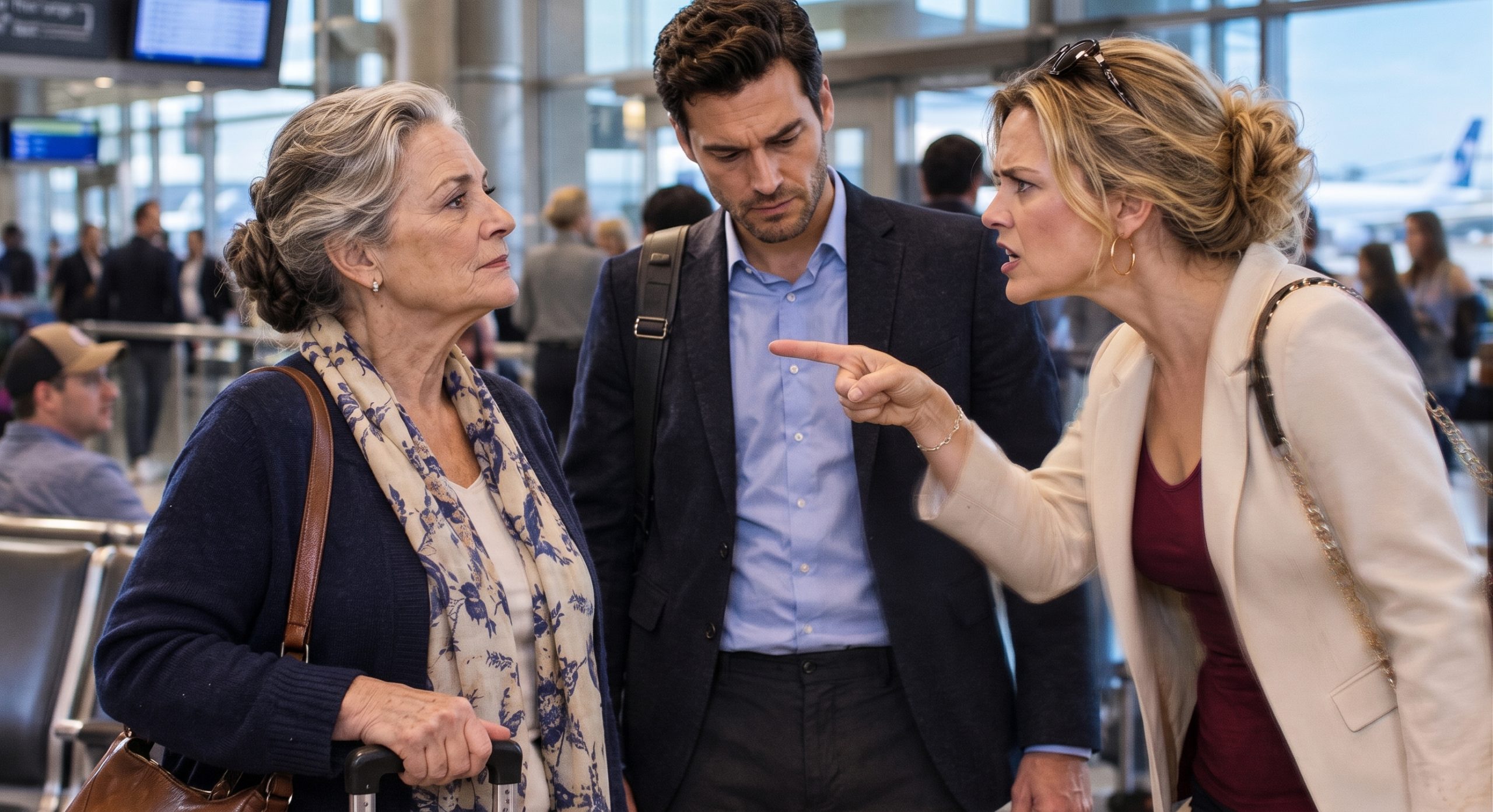
PART 5
I placed money on the table for my lunch.
Then I stood.
“One more thing. Please don’t contact my financial adviser, my attorney, or my bank again. Any financial matter involving me will go through me directly.”
I walked out.
This time, I didn’t look back.
About three weeks later, something unexpected happened.
I received a phone call from Susan.
“Aunt Carol, you need to see something.”
“What is it?”
“It’s about Amber.”
Susan sent me a screenshot.
It was a message Amber had sent to a family group chat months earlier.
The message read:
Once Carol gets comfortable with us handling her financial matters, things will be much easier. Bradley should be able to manage the house eventually, and then we won’t have to worry about renting forever.
Another message followed.
She trusts Bradley completely. We just need to make sure she understands that we’re doing this for her own good.
I read the messages several times.
My hands trembled.
Then Susan sent another screenshot.
This one was from Bradley.
Let’s not rush anything. Mom isn’t going to agree if she thinks we’re trying to get involved with the house.
I sat down.
I had hoped Bradley had simply been careless.
I had hoped Amber had misunderstood something.
But these messages suggested something more deliberate.
I sent everything to Margaret.
She reviewed the screenshots and advised me to preserve the originals, including their dates and the surrounding conversation where available.
She also confirmed that the financial documents we had reviewed were being addressed through the proper legal channels.
I didn’t want a family war.
I didn’t want to destroy my son’s life.
But I wasn’t going to pretend I hadn’t seen what I had seen.
That evening, I called Bradley.
“Son, I need you to come over.”
He arrived the next afternoon.
I showed him the screenshots.
He stared at the phone.
For several seconds, he said nothing.
Then he whispered:
“Where did you get these?”
“Does it matter?”
He looked at the messages again.
“Mom, this was taken out of context.”
“Then explain the context.”
He rubbed his face.
“Amber was upset. We were talking about our financial situation.”
“And you agreed that I needed to be persuaded into giving you access to my house.”
“I didn’t mean it like that.”
“Then what did you mean?”
He stood and walked toward the window.
“I was scared, Mom.”
I frowned.
“Scared of what?”
“Losing everything. The mortgage, the bills, the car payments. Amber kept telling me we were falling behind. She said you had enough money to help us.”
I looked at him.
“And you believed that meant you were entitled to it?”
“No.”
“Then why didn’t you say no?”
He turned toward me.
“Because I wanted everyone to be happy.”
I shook my head.
“Bradley, you cannot make everyone happy by sacrificing the person who loves you most.”
He began crying.
“I know.”
I wanted to comfort him.
The instinct was still there.
Even after everything, I wanted to put my arms around him and tell him things would be okay.
But I didn’t.
He needed to understand that consequences were not cruelty.
They were part of growing up.
“Have you spoken to Amber about these messages?” I asked.
“Yes.”
“And?”
He hesitated.
“She says she was just venting.”
“Do you believe her?”
He looked down.
“I don’t know anymore.”
For the first time, I saw something in my son that I hadn’t seen in years.
Doubt.
Not about me.
About the choices he had made.
Over the next two months, Bradley and Amber began having serious problems.
Without my financial assistance, they had to reconsider their spending.
They sold the expensive SUV and replaced it with a more affordable used vehicle.
They canceled several subscriptions and stopped eating at expensive restaurants every weekend.
Bradley took on additional work.
Amber began looking for a better-paying position.
I heard about these changes through Bradley.
He didn’t ask me for money.
That was a beginning.
One Saturday morning, he came to my house alone.
He brought groceries.
Not expensive gifts.
Just groceries.
“I thought you might need these.”
I smiled.
“Thank you.”
We made lunch together.
For the first time in a long while, we talked about ordinary things.
He told me about work.
I told him about a gardening class I had joined.
He seemed genuinely interested.
Then, while washing dishes, he said:
“Mom, I think I need to tell you something.”
I dried my hands.
“What is it?”
“Amber and I are separating.”
I wasn’t surprised.
But hearing it still hurt.
“I’m sorry, Bradley.”
He nodded.
“We’ve been arguing constantly. She thinks you turned me against her. I think I’ve spent years avoiding difficult conversations because I was afraid of upsetting her.”
I sat beside him.
“Are you sure this is what you want?”
He took a long breath.
“I don’t know what the future looks like. But I know I can’t keep living like this.”
I reached for his hand.
“Then make your decisions carefully. Don’t do anything because you’re angry. And don’t do anything because you’re afraid of being alone.”
He nodded.
Then he said something that made my heart ache.
“I should have defended you at the airport.”
I looked at him.
“Yes, you should have.”
“I keep thinking about that moment. You were standing there, and Amber was talking to you like you were nothing. I just stood beside her.”
I squeezed his hand.
“I remember.”
“I am so sorry, Mom.”
This time, I believed him.
Not because he cried.
But because he finally acknowledged exactly what he had done.
Six months passed.
My life changed in ways I hadn’t expected.
I joined a local gardening club.
I started taking watercolor classes at the community center.
I went on weekend trips with Susan and two women I had known for years but rarely spent time with.
One of them, Margaret, had lost her husband three years earlier.
Another, Elaine, had never married.
We became close friends.
Every Thursday, we met for lunch.
Sometimes we talked about our husbands.
Sometimes we talked about our children.
Sometimes we talked about nothing important at all.
And that was wonderful.
I also made a decision about Tom’s money.
I met with Margaret and Daniel and established a financial plan that protected my retirement, preserved my independence, and allowed me to support causes I genuinely cared about.
I created a small scholarship fund at the local community college for students pursuing engineering.
Tom would have loved that.
I also updated my estate documents.
Bradley would still be included in my estate plan, but everything would be handled according to my wishes, not according to anyone else’s expectations.
I wasn’t punishing my son.
I was protecting my future.
There was a difference.
One afternoon, I visited Tom’s grave.
I brought white roses.
I sat beside the headstone and told him everything.
I told him about the airport.
About the resort.
About the paperwork.
About Bradley’s apology.
And about the gardening club.
I smiled through my tears.
“You were right, Tom. I spent too much time saving for a future I wasn’t allowing myself to enjoy.”
The wind moved gently through the trees.
I placed the flowers beside his name.
“I think I’m finally living.”
Almost a year after the Cabo trip, Bradley invited me to dinner.
He had moved into a smaller apartment after his separation from Amber.
He was working hard, paying his own bills, and slowly rebuilding his life.
When I arrived, he opened the door wearing an old baseball shirt.
“Hi, Mom.”
“Hello, sweetheart.”
The apartment was modest.
There was a small dining table, a comfortable sofa, and a photograph of Tom on the bookshelf.
I noticed it immediately.
“You brought your father’s picture.”
Bradley nodded.
“I wanted him here.”
We ate dinner together.
He had prepared roast chicken, potatoes, and green beans.
It wasn’t fancy.
But it was delicious.
After dinner, he brought out a small envelope.
“What’s this?”
“Something I’ve wanted to give you.”
Inside was a handwritten letter.
I unfolded it.
Mom,
I have spent a lot of time thinking about the last few years.
I used to tell myself that you were strong enough to handle everything. I told myself that you didn’t mind helping us. I told myself that Amber was simply outspoken and that you were sensitive.
Those were excuses.
The truth is that I became comfortable receiving your help and uncomfortable acknowledging what it cost you.
I allowed my wife to disrespect you because I was afraid of conflict. I accepted money from you while letting other people believe I had paid for things myself.
And at the airport, when you needed me to stand beside you, I walked away.
I cannot change that moment.
I cannot give you back the years when you felt unwanted.
But I can promise that I will never again confuse your love with an obligation.
You are my mother. You deserved better from me.
I am sorry.
Love, Bradley.
I couldn’t speak.
My eyes filled with tears.
Bradley sat across from me.
“I don’t expect you to forget anything.”
I folded the letter carefully.
“Thank you.”
He reached across the table.
“Do you think we can have a better relationship?”
I looked at my son.
The little boy who used to run through the house in muddy shoes.
The teenager who once stayed up all night helping his father repair an old car.
The man who had hurt me.
And the man who was finally trying to make things right.
“Yes,” I said. “But we’re going to build it differently.”
He nodded.
“That’s fair.”
I smiled.
“And one more thing.”
“What?”
“Next time we go on vacation, everyone pays for their own ticket.”
For the first time in a long time, we both laughed.
Epilogue: The Second Trip to Cabo
Two years after the airport incident, I returned to Cabo San Lucas.
This time, I traveled with Susan and my two closest friends.
We stayed at a beautiful oceanfront hotel.
I paid for my own room.
I chose my own excursions.
I ordered whatever I wanted.
On the second evening, we sat beside the ocean watching the sunset.
Susan raised her glass.
“To new beginnings.”
Elaine smiled.
“To women who finally learn to put themselves first.”
We laughed.
Later that night, I received a photograph from Bradley.
It showed him standing beside a small Christmas tree in his apartment.
His message read:
Wish you were here, Mom. I hope you’re having a wonderful trip. Love you.
I smiled and replied:
Love you too. I’m having a wonderful time.
Then I put my phone away.
I didn’t need to rush home.
I didn’t need to rescue anyone.
I didn’t need to prove that I was generous.
I was simply enjoying my life.
The following morning, I walked along the beach alone.
The waves rolled gently onto the sand, and the sun warmed my face.
I thought about the woman I had been at Denver International Airport.
The woman who had stood in a first-class boarding line, hoping her son would finally choose her.
I wished I could go back and tell her something.
I would tell her that she didn’t need to buy a place in her own family.
She didn’t need to pay twelve thousand dollars to deserve a seat at the table.
She didn’t need to fund someone’s happiness while sacrificing her own.
And most importantly, she didn’t need to keep giving simply because she was afraid of being left behind.
I had once believed that being a good mother meant saying yes.
Now I understood that sometimes the most loving thing you can do is say no.
I still loved Bradley.
I always would.
But I no longer measured that love by how much money I gave him.
And I no longer measured my worth by how much people needed me.
Tom had written that letter nine years earlier.
Live your life, Carol. Be happy. Don’t save everything for a future that may never arrive.
It had taken me far too long to understand those words.
But standing there, with the ocean stretching endlessly before me, I finally did.
I wasn’t the lonely woman who had been pushed aside at an airport anymore.
I was Carol Jensen.
Sixty-eight years old.
A mother.
A widow.
A friend.
And a woman who had finally learned that her life belonged to her.
And this time, when I walked toward the ocean, nobody was asking me to move out of their way.
