PART 4
I wasn’t going to make threats.
I had spent years trying to prove I was ready for a leadership position.
Now I was going to let the evidence speak.
The following morning, Greg from HR sent me an invitation.
Subject:
Formal Review – Operations Responsibilities and Promotion Process
The meeting was scheduled for Thursday.
Attendees included Greg, Craig, Martin Hale, and me.
I accepted.
Then, at 9:12 a.m., my phone rang.
It was Martin.
“Rebecca, do you have a few minutes?”
“Of course.”
He sounded serious.
“I’ve been reviewing the operations reports from the last quarter.”
“Okay.”
“There’s something I need to discuss with you before Thursday.”
I waited.
“Warren contacted me directly yesterday.”
My stomach tightened.
“What happened?”
“He asked whether our company was experiencing internal staffing problems.”
I didn’t respond.
Martin continued.
“He also asked whether you were still with the organization.”
I looked at my desk.
“Yes. I’m still here.”
“I know. But apparently, he’s concerned that we’re losing the person who understands his account.”
I took a breath.
“I’m not leaving.”
Martin was quiet for a moment.
Then he said:
“Rebecca, I read your performance review. I also reviewed your after-hours documentation.”
I waited.
“And I found something else.”
“What?”
“Your original promotion application.”
I frowned.
“What about it?”
“It contains the assessment notes from the interview panel.”
I sat up.
“Assessment notes?”
“Yes.”
He paused.
“Craig told HR that you were not selected because you lacked strategic leadership experience.”
I already knew that part.
But Martin’s next sentence made my hands go cold.
“However, the original interview scoring tells a different story.”
I looked at the office door.
“What do you mean?”
Martin lowered his voice.
“Rebecca, you actually received the highest technical and operational leadership score of all the candidates.”
I couldn’t speak.
“Then why didn’t I get the position?”
There was a long silence.
Finally, Martin answered.
“That’s exactly what we’re trying to find out.”
And just before he ended the call, he added something that changed everything.
“There’s one more thing. The person who originally recommended you for the senior operations role wasn’t Craig.”
I gripped my phone.
“Who was it?”
Martin paused.
“Warren. Your largest client personally requested that you be considered for the position because, in his words, you’re the only person in this company who has consistently kept his operation running.”
I stared at the wall.
Then Martin said:
“And Rebecca, he didn’t just recommend you. He submitted a formal letter to our executive board.”
I had never seen that letter.
I hadn’t even known it existed.
But apparently, it had been sitting in the company’s records for months.
And on Thursday, everyone in that meeting was going to read it.
Thursday morning arrived faster than I expected.
I reached the office at 7:56 a.m., placed my bag beside my desk, and opened my computer.
For the first time in months, I wasn’t wondering what emergency would appear before I finished my coffee.
I was wondering what would happen in that meeting.
At 9:00 a.m., Greg sent me a message.
Please come to Conference Room B.
I picked up my folder and walked down the hallway.
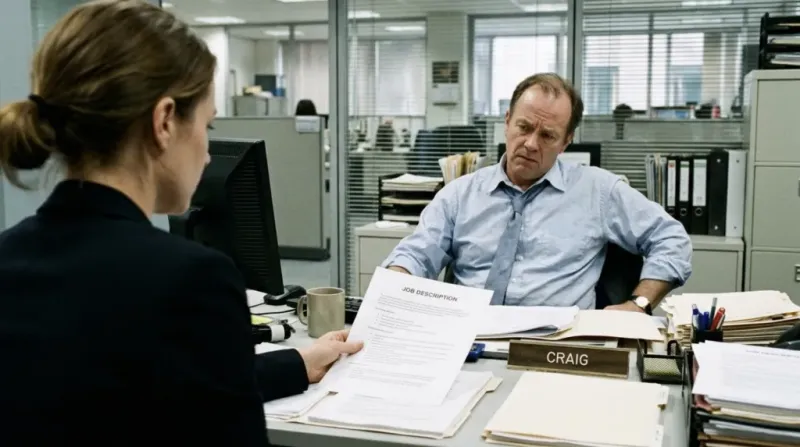
When I entered, Craig was already there.
He sat at the far end of the table, looking through his phone. Tanya was beside him. Martin Hale, the technology director, sat across from them.
Greg had a laptop open.
There was one empty chair.
Mine.
“Good morning,” I said.
“Rebecca,” Greg replied. “Please have a seat.”
I sat down.
Greg began.
“The purpose of this meeting is to review the concerns raised regarding Rebecca’s recent changes to her working arrangements, the responsibilities assigned to her position, and the recent senior operations promotion.”
Craig immediately leaned forward.
“I want to make something clear. This isn’t about the promotion. This is about teamwork.”
I looked at him.
Greg raised one hand.
“Let’s allow everyone to speak.”
He turned toward me.
“Rebecca, would you explain your position?”
I opened my folder.
“I have no objection to performing my assigned responsibilities. I’ve continued doing that every working day. However, I am no longer accepting ongoing senior-level responsibilities outside my job description without formal authorization, appropriate compensation, or an agreed arrangement.”
Craig shook his head.
“You’re making it sound like we’ve exploited you.”
I didn’t respond.
Instead, I placed my annual performance review on the table.
Then the spreadsheet documenting my 143 after-hours incidents.
Then the temporary senior operations assignment email.
Martin examined the documents.
Craig looked increasingly uncomfortable.
Greg asked, “Craig, can you explain why Rebecca was assigned these responsibilities for more than two years without a formal title adjustment?”
Craig cleared his throat.
“She was the most experienced person on the team. It made operational sense.”
“Was she compensated?”
“No.”
“Was the arrangement formally reviewed?”
“Not consistently.”
Martin finally spoke.
“Then why did you tell the interview panel she lacked experience performing senior operational responsibilities?”
Craig turned toward him.
“I didn’t say she lacked technical experience. I said she wasn’t ready for leadership.”
Martin opened his laptop.
“Let’s look at the actual assessment.”
He connected to the conference room screen.
A document appeared.
It contained the scoring from the senior operations interviews.
There were three candidates.
Tanya had scored well in communication and presentation.
Another candidate had strong project management experience.
But my scores were higher in operational judgment, technical leadership, incident management, client relations, and process improvement.
My overall score was the highest.
I stared at the screen.
Martin pointed to the assessment notes.
“The interview panel recommended Rebecca as the strongest operational candidate.”
Craig shifted in his chair.
“Those scores weren’t the only consideration.”
“Correct,” Martin replied. “That’s why I’m asking why the final decision differed so significantly from the panel’s recommendation.”
Nobody answered.
Then Martin opened another document.
“This is the client recommendation submitted by Warren.”
He began reading.
To the Executive Leadership Team,
I have worked with your operations department for several years. During that time, Rebecca has consistently demonstrated the professionalism, technical understanding, and accountability required to manage complex operational relationships.
Whenever we experienced an issue, she was the person who understood our systems, communicated clearly, and followed through until the problem was resolved.
I understand that job titles and internal structures are company decisions. However, I strongly recommend that Rebecca be considered for senior operational leadership.
Our confidence in your organization has been strengthened significantly by her work.
The letter ended with Warren’s signature.
I looked down at the table.
I had spent years wondering why nobody noticed what I was doing.
Apparently, people had noticed.
Just not the person who controlled my promotion.
Martin closed the document.
“Craig, did you receive this letter?”
Craig nodded reluctantly.
“Yes.”
“When?”
“Several months ago.”
“Did you share it with the interview panel?”
Craig didn’t answer immediately.
Greg repeated the question.
“Craig?”
“No.”
The room became silent.
Martin leaned back.
“Why not?”
Craig looked at me.
“I didn’t think an external client should influence an internal promotion.”
Martin’s expression hardened.
“An external client shouldn’t determine our organizational structure. But when a major client provides documented feedback about an employee’s performance, it’s certainly relevant information.”
Craig crossed his arms.
“I made the decision I believed was best for the department.”
I finally spoke.
“Then I would like to ask one question.”
Everyone turned toward me.
“If I wasn’t ready to perform the senior operations position, why was I trusted to perform it every night, every weekend, and every time something went wrong?”
Craig opened his mouth.
Nothing came out.
I continued.
“You said coordinators were replaceable. But for two years, the company depended on me to maintain responsibilities that weren’t included in my title.”
I looked at Tanya.
“And I want to make something clear. I don’t blame her for accepting the promotion. She was given an opportunity, and she deserved to be treated fairly too.”
Tanya looked at me quietly.
I turned back to Greg.
“I don’t want anyone punished because I finally started following my employment agreement. I want the company to recognize the work, establish clear responsibilities, and stop treating unpaid availability as a requirement for loyalty.”
For several seconds, nobody spoke.
Then Greg closed his notebook.
“I think we’ve identified several issues that require further review.”
He looked directly at Craig.
“Until that review is complete, all after-hours operational responsibilities must be assigned formally. No employee should be expected to provide continuous availability without an approved arrangement.”
Craig looked furious.
But he said nothing.
The meeting ended.
I returned to my desk.
Tanya followed me a few minutes later.
“Rebecca?”
I turned.
“Hi.”
She looked nervous.
“I wanted to apologize.”
“For what?”
“For accepting the position without understanding what was happening. I thought I was walking into a department with established processes and a team that was ready to operate independently.”
I nodded.
“I understand.”
She pulled a chair closer.
“I also wanted to tell you something. I’ve been struggling with the position. Not because I don’t want to do the work, but because I don’t know half the things you were handling.”
I looked at her.
“That’s why documentation matters.”


One Comment on “PART 4 – My Boss Said I Wasn’t Ready for a Promotion—So I Stopped Doing the Senior Job for Free”