PART 4
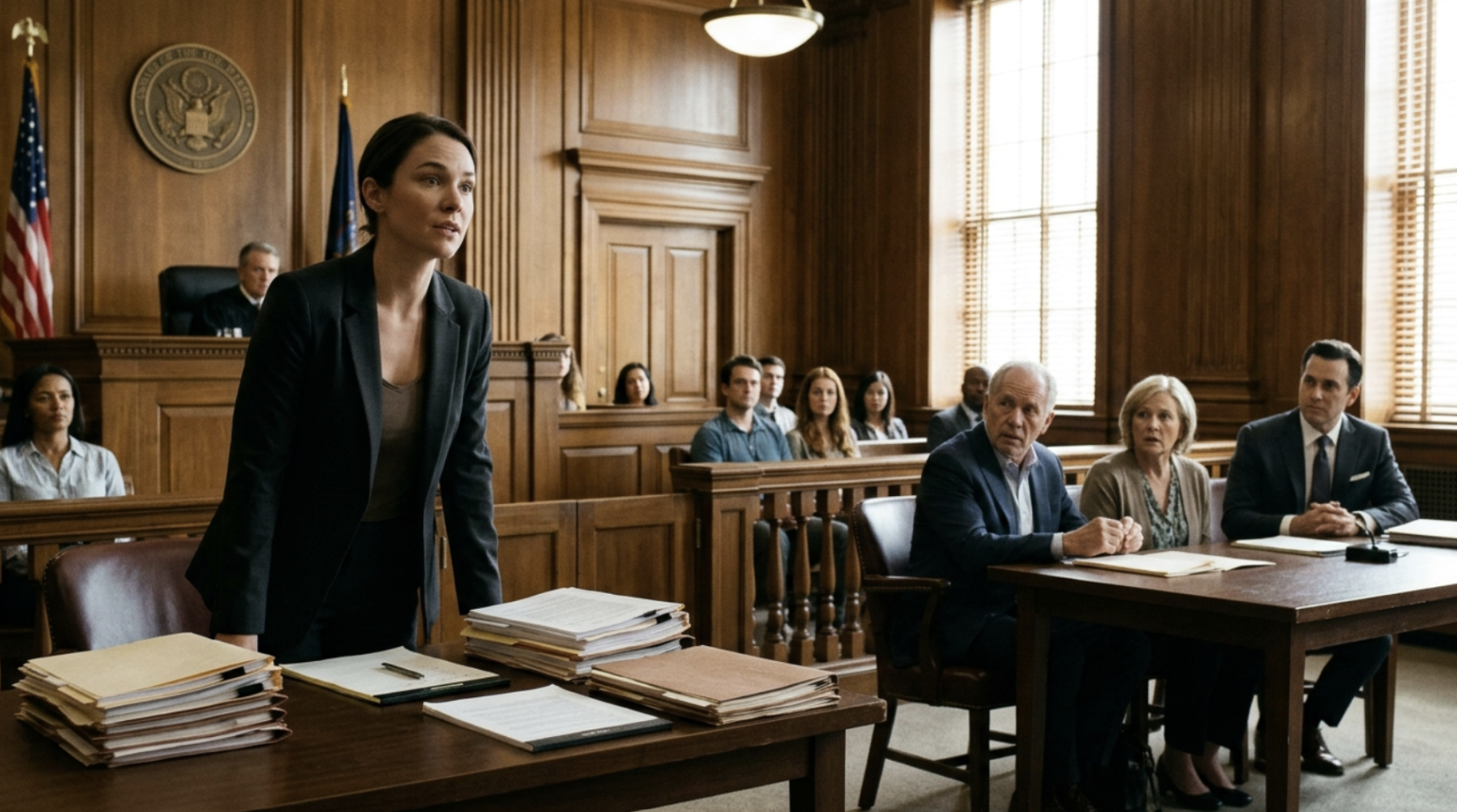
“Yes, Your Honor, subject to the court’s review of its authenticity and admissibility.”
She nodded.
“Very well. We will take this under advisement.”
I sat down.
For the first time that morning, I felt something approaching relief.
But then my parents’ attorney stood again.
“Your Honor, before the court makes any decision, we have a matter of our own to raise.”
I looked up.
He approached the bench with a thick folder.
“My clients have recently discovered information concerning the late Mr. Elijah Marsh that they believe directly affects the validity of the inheritance.”
My stomach tightened.
“What information?” the judge asked.
The attorney opened the folder.
“Mr. Elijah Marsh had a medical condition during the final months of his life. We have reason to believe that he may not have been mentally competent when he executed his final will.”
I stared at him.
That was impossible.
Elijah had been sharp until the end.
He remembered every chess opening. He could calculate investment returns in his head. He corrected my grammar in birthday cards and still beat me at chess when he was eighty.
The attorney continued.
“We believe the will may have been the result of undue influence exerted by the defendant, who stood to receive the entirety of the estate.”
My mother lowered her tissue.
And I understood.
They weren’t finished.
They were trying to destroy Elijah’s final decision because they couldn’t find a legal way to take the money from me.
I stood.
“Your Honor, I anticipated this allegation.”
I reached into my briefcase and removed one final folder.
“But before we discuss Mr. Marsh’s medical condition, I would like the court to review the independent psychiatric evaluation completed six months before his death, the two witness affidavits, and the video recording of the will execution.”
Their attorney blinked.
I continued.
“Elijah knew exactly what he was doing. He had independent legal counsel. He had two witnesses. And he explained his decision in his own words.”
Judge Wynn looked at the folder.
“Is there a recording?”
“Yes, Your Honor.”
“Have you provided a copy to opposing counsel?”
“I have.”
The judge nodded.
“Then I will review it.”
My mother suddenly leaned toward her attorney and whispered something urgently.
He shook his head.
But she wasn’t finished.
She stood.
“Your Honor, there’s something else you should know.”
The judge looked at her.
“Mrs. Marsh, you need to remain seated unless I give you permission to speak.”
My mother ignored the warning.
“Elijah Marsh wasn’t the innocent man Matthew makes him out to be!”
My heart stopped.
She looked directly at me.
“He had secrets too.”
I felt my stomach tighten.
“What secrets?” I asked.
Her eyes filled with tears.
“He knew about the insurance money. He knew what we did. And he threatened us.”
The courtroom erupted in whispers.
Judge Wynn struck her gavel.
“Order!”
I stared at my mother.
“What are you talking about?”
She looked at me with an expression I couldn’t understand.
Fear.
Anger.
And something that almost resembled satisfaction.
“Elijah didn’t just find you by accident, Matthew.”
My mouth went dry.
She continued.
“He knew who you were. He knew who your parents were. And he had been watching our family long before you ever met him.”
I looked toward the judge.
Then toward my father’s table.
My father had gone completely pale.
Because he knew something.
Something he hadn’t expected her to say.
Judge Wynn ordered everyone to remain seated.
“Mr. Marsh,” she said carefully, “do you have any knowledge of what Mrs. Marsh is referring to?”
I shook my head.
“No, Your Honor.”
My mother slowly reached into her handbag.
She removed a folded piece of paper.
“I have proof.”
My father’s attorney immediately grabbed her arm.
“Evelyn, don’t.”
But she pulled away.
“It’s time he knows the truth.”
She placed the paper on the table.
It was an old photograph.
And when the bailiff carried it toward the judge, I saw the image clearly.
It showed my eight-year-old self standing outside the Greyhound station.
Beside me was Elijah.
But that wasn’t what made my blood run cold.
It was the date written on the back.
February 14, 1994.
The exact day my parents abandoned me.
And underneath the date were six handwritten words:
“He was supposed to take him.”
I looked at my mother.
Then at my father.
And for the first time that morning, I wasn’t certain I understood the story of my own life.
Because if Elijah had been waiting for me that night…
Who had he really been waiting to save me from?
And why had my parents spent twenty-two years pretending they had never known him?
For several seconds, I couldn’t move.
The photograph lay on the judge’s desk.
My eight-year-old face stared back at me from the paper. I was wearing the same blue coat I remembered wearing that February afternoon. My hair was messy, my cheeks were red from the cold, and I was holding the little granola bar my mother had given me.
But Elijah was standing beside me.
Not inside the station.
Not approaching me after the police arrived.
He was there before my parents left.
And the words written on the back of the photograph kept repeating in my head.
He was supposed to take him.
I turned toward my mother.
“What does that mean?”
She wouldn’t look at me.
“Mother, I’m asking you a question.”
My father suddenly stood.
“That’s enough, Evelyn. You’ve said too much.”
Judge Patricia Wynn struck her gavel.
“Mr. Marsh, sit down. Mrs. Marsh, I want you to explain the photograph. Who wrote those words?”
My mother swallowed.
“Arthur did.”
Everyone turned toward my father.
He looked furious.
“She’s lying.”
“Then tell us the truth,” I said.
He glared at me.
“You have no idea what happened back then.”
“You’re right. I was eight years old. You were supposed to be the adult.”
He clenched his fists.
Judge Wynn instructed him to remain seated.
Then my mother began speaking.
And what she revealed changed everything I thought I knew about the man who had raised me.
Twenty-two years earlier, Arthur Marsh had been drowning in debt.
He had invested in a small construction business that failed after several major contracts collapsed. He had borrowed money from private lenders, used credit cards to cover payroll, and eventually began selling family possessions to keep creditors away.
My mother said they were desperate.
They had received several threatening letters.
They were afraid of losing their house.
And then Arthur met Elijah Marsh.
Elijah was not a stranger to my biological parents.
He was my father’s distant cousin.
They shared a family connection through Arthur’s grandfather, although they had not spoken regularly in years.
Elijah was older, financially successful, and had spent most of his adult life building a business portfolio.
He had never married.
He had no biological children.
And according to my mother, he had been looking for someone to leave his estate to.
Arthur knew about Elijah’s wealth.
He also knew Elijah had a particular interest in helping children who had been abandoned or neglected.
So my father approached him.
He told Elijah that he and Evelyn were struggling financially and asked whether he could help them.
Elijah refused to give Arthur money directly.
Instead, he offered something different.
He said he would help pay for my education and provide financial support if my parents agreed to raise me properly.
My mother said they accepted.
But Arthur wanted more.
He wanted access to Elijah’s money immediately.
When Elijah refused, my father became angry.
He began telling people that Elijah was trying to interfere with his family.
Eventually, Arthur came up with a different plan.
He told Elijah that he and Evelyn were considering sending me away to live with relatives because they could no longer afford to care for me.
Elijah believed him.
He agreed to meet them at the Greyhound station.
He thought they were bringing me there so he could take me temporarily while my parents resolved their financial problems.
But Arthur had another plan.
He had already arranged the insurance policy.
He intended to abandon me, collect the insurance payment, and tell everyone I had run away.
My mother looked at the photograph again.
“Elijah was supposed to take you that day,” she whispered. “Arthur was supposed to hand you over to him.”
I stared at her.
“Then why didn’t he?”
She began crying.
“Because your father changed his mind.”
My father shook his head.
“That’s not what happened.”
My mother continued.
“Arthur said Elijah was trying to take control of everything. He said if we gave you to him, we would lose our chance to get the money.”
I felt sick.
“So you left me there?”
My mother covered her mouth.
“Yes.”
The word was barely audible.
But it was enough.
I turned toward my father.
“And you?”
He stared at the table.
“You had an opportunity to give me to someone who wanted to care for me. Instead, you left me alone at a bus station.”
Arthur finally spoke.
“Elijah had no right to interfere with my family.”
I looked at him.
“He wasn’t interfering. He was trying to save your son.”
For the first time, my father had no response.
Judge Wynn ordered the hearing suspended while the court reviewed the new allegations.
The photograph was admitted for further authentication, and the judge instructed both sides to submit additional evidence concerning Elijah’s involvement.
My parents’ attorney looked increasingly uncomfortable.
He had entered that courtroom expecting a straightforward inheritance dispute.
Now he was watching his clients become the center of a possible criminal investigation.
But I wasn’t finished.
I still had one question.
Why had Elijah never told me?
Why had he allowed me to believe our meeting was an accident?
Why had he never explained that he had been connected to my biological parents?
I had spent twenty-two years loving him.
I thought I knew everything about him.
Apparently, I didn’t.
That evening, I returned to the house in Centerville.
The house was quiet.
Elijah’s reading glasses were still on the little table beside his favorite chair. His chessboard remained on the wooden coffee table. A half-finished book was lying open beside the window.
I stood in the doorway for a long time.
Then I walked into his study.
I opened the desk drawers.
I checked the filing cabinets.
I searched through the old photographs.
Nothing.
Finally, I remembered something.
Elijah had once told me that he kept the things he valued most in a small locked cabinet behind the bookshelves.
I had never asked what was inside.
I moved the books aside and found the cabinet.
The key was still taped underneath the lowest shelf.
Inside were several envelopes, a small leather notebook, and an old photograph album.
I opened the notebook.
The first page contained a date.
February 14, 1994.
My birthday was not that day.
It was the date I had been abandoned.
Below the date, Elijah had written:
I arrived at the station at 4:10 p.m. Arthur and Evelyn were supposed to bring Matthew to me. They never came back. I waited until the police arrived. When I learned what had happened, I knew I could not allow that child to grow up believing nobody wanted him.
I turned the page.
There were more entries.
February 18, 1994: I spoke with the social worker. Matthew is frightened. He still believes his parents will return.
March 3, 1994: He asked whether I had seen his mother. I told him I hadn’t. I wanted to tell him the truth, but he is only eight years old.
April 20, 1994: Matthew finally laughed today. We played chess for almost two hours. He beat me at the end, although I suspect I let him win.
I smiled through my tears.
That sounded like Elijah.
I kept reading.
September 1996: Lorraine contacted me. She confirmed that Arthur and Evelyn had received the insurance payment. She also told me they knew Matthew was alive. I have decided not to confront them yet. Matthew needs stability, not another battle with adults who have already failed him.
Then I reached an entry from 2001.
Matthew asked whether I would ever leave him. I told him everyone eventually leaves this world, but love does not have to disappear with us. I hope he understands one day.
My vision blurred.
I turned the final page.
It contained a short note.
Matthew, if you are reading this, then I am no longer here to explain myself. I am sorry I kept certain things from you. I did not want your childhood to become a courtroom before you were old enough to understand what had happened.
Your parents made their choices. I made mine.
I chose you.
Not because of the money. Not because of the family name. Not because I expected anything in return.
I chose you because you deserved someone who would come back.
Love, Elijah.
I sat on the floor.
And I cried.
Not the kind of crying that comes from anger.
The kind that comes when you realize someone loved you so completely that they spent their entire life protecting you from a truth you weren’t ready to carry.
The following morning, I called Denise Carter.
“I need you to investigate something else.”
“What is it, Matthew?”
“Find out whether Elijah left any additional documents concerning the arrangement with my parents in 1994.”
She was quiet for a moment.
“Are you sure you want to reopen all of this?”
I looked at the notebook.
“Yes.”
“All right. I’ll start immediately.”
Three days later, Denise called.
She had found something.
A lawyer who had represented Elijah in 1994 was still alive.
His name was Thomas Whitaker.
He was eighty-six years old and living in a retirement community outside Columbus.
According to Denise, he had kept copies of several documents from the original arrangement.
I drove there the following morning.
Mr. Whitaker was sitting near a large window when I arrived.
He was thin, wore a gray cardigan, and had a pair of reading glasses hanging from a cord around his neck.
When Denise introduced me, he looked at my face for several seconds.
Then he smiled sadly.
“You must be Matthew.”
I nodded.
“You knew me?”
“I knew about you before you knew about me.”
He motioned toward a chair.
“Elijah spoke about you constantly.”
I sat down.
“I found his notebook.”
Mr. Whitaker nodded.
“I wondered whether he had kept it.”
“Why didn’t he tell me about my parents?”
The old attorney folded his hands.
“Because Elijah believed you had already suffered enough.”
He opened a drawer beside his chair and removed a thick envelope.
“This is what he asked me to preserve.”
Inside were copies of the original agreement between Elijah and Arthur.
There was also a letter written by Arthur.
I read it carefully.
In it, my father acknowledged that Elijah had offered to take temporary custody of me if my parents were unable to provide a safe home.
But the most important document was a handwritten statement signed by Arthur.
It read:
I understand that Elijah Marsh will provide financial support for Matthew’s care and education. In exchange, I agree that I will not interfere with his guardianship arrangement as long as Matthew is safe and properly cared for.
The document had been signed one week before the Greyhound incident.
My father had agreed to let Elijah care for me.
Then he abandoned me anyway.
“Why is this important?” I asked.
Mr. Whitaker adjusted his glasses.
“Because it establishes that your father knew Elijah was prepared to take responsibility for you. It also contradicts the claim that Elijah manipulated you or your parents.”
He reached for another document.
“And there’s something else.”
It was a letter from Elijah to Arthur, dated three days after my abandonment.
Arthur,
I waited at the station until the police arrived. I have been informed that Matthew is now under the care of child services. I am prepared to pursue guardianship immediately.
You have made a terrible decision. But I will not allow Matthew to suffer because of it.
If you ever decide to become the father he deserves, you may contact me. Until then, I will do everything in my power to give him a safe home.
Elijah.
My eyes moved to the bottom of the page.
There was a handwritten response from Arthur.
Just one sentence.
Keep him. We are finished with him.
I closed my eyes.
I had spent twenty-two years wondering whether my parents had regretted abandoning me.
Now I had the answer.
They had not merely walked away.
They had confirmed it in writing.
Mr. Whitaker placed a hand on the folder.
“Elijah never wanted you to use these documents against anyone. He simply wanted them preserved in case the truth was ever needed.”
I looked at him.
“Thank you.”
He smiled.
“Your father was a good man, Matthew.”

One Comment on “PART 4 – My Parents Abandoned Me at a Greyhound Station When I Was 8—22 Years Later, They Sued Me for the $3.8 Million Inheritance Left by the Stranger Who Raised Me…”