PART 5
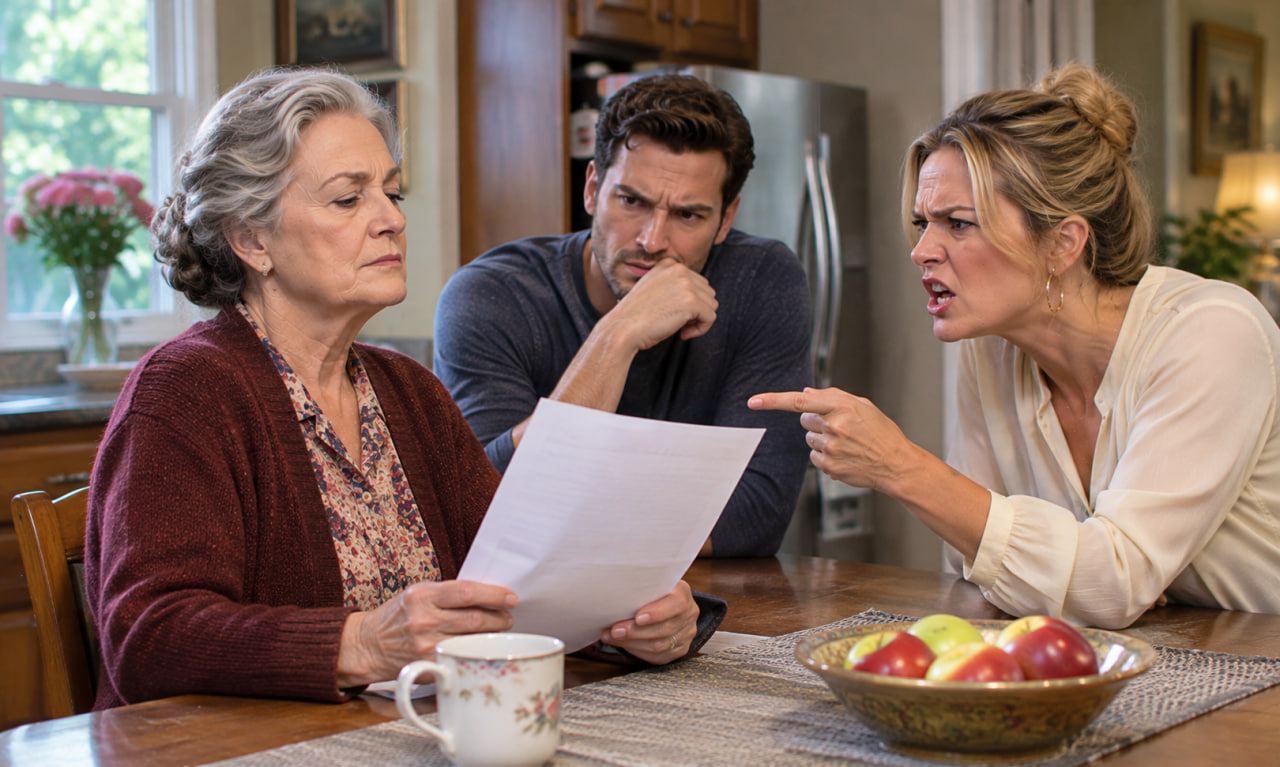
“You could have said, ‘That’s my mother. She doesn’t owe us rent for the home she helped build.’”
He looked down at the table.
“I should have.”
“Yes. You should have.”
For a long time, he said nothing.
Then he spoke quietly.
“Things haven’t been good, Mom.”
I waited.
“Sloan and I have been arguing about money. Her mother’s care is expensive. We’ve had some unexpected bills. I thought asking you to contribute would help.”
I looked at him.
“How much money are you spending on your mother’s care?”
He hesitated.
“About $1,200 a month.”
“And how much are you paying toward the house?”
He looked uncomfortable.
“Not as much as we should.”
I nodded.
“Then perhaps you need to discuss your finances with your wife instead of presenting your mother with an invoice.”
He rubbed his eyes.
“You’re right.”
I wanted to believe him.
But I had heard those words before.
So I asked him something I had never asked.
“Gavin, how long did you know Sloan wanted to charge me rent?”
He looked at me.
“A few weeks.”
“A few weeks?”
“She brought it up before.”
“And you agreed?”
He swallowed.
“I thought it would be temporary.”
I felt my heart sink.
“So you knew.”
“Mom—”
“You knew, and you let me sit at that table believing this was something she had decided alone.”
He looked ashamed.
“I didn’t want another argument.”
I stared at my son.
That was the entire problem.
He had been so afraid of arguing with his wife that he had allowed his mother to be humiliated instead.
I stood and walked toward the window.
“Gavin, I love you. But I am not returning to that house under those conditions.”
He nodded slowly.
“I understand.”
“And I won’t pay rent.”
“I understand.”
“And I will not be responsible for your household expenses anymore.”
He looked at me.
For a moment, I saw the little boy who used to run through the kitchen looking for me whenever he scraped his knee.
Then I remembered the grown man who had watched his wife slide a rent demand across Warren’s table.
“I understand, Mom,” he repeated.
He stood.
Before leaving, he turned around.
“Can I bring Lily and Noah to visit this weekend?”
I smiled.
“Of course.”
He nodded.
Then he walked toward the door.
Just before he left, he said something that surprised me.
“I miss Dad.”
I looked at him.
“So do I.”
He lowered his head.
“I wish I had listened to him more.”
I didn’t answer.
Some lessons arrive too late for apologies to erase the damage.
But sometimes they arrive early enough to change what happens next.
The following week, Daniel called me.
He had completed the review of the property documents.
“Elaine, everything we discussed is confirmed by the recorded agreement. You retained a life estate. Gavin holds the remainder interest, but that doesn’t give him unrestricted authority over your occupancy.”
“Does that mean I can return if I want to?”
“Subject to the exact terms of your agreement, yes. You retain substantial rights. But you don’t have to return.”
I looked around my condo.
“I don’t think I want to.”
“Then that’s your decision.”
He continued.
“I also recommend that we send Gavin a formal letter clarifying your legal position. It will make clear that you are not agreeing to a rental arrangement and that any changes affecting your retained rights must be handled appropriately.”
“Please do.”
One week later, Gavin received the letter.
According to Margaret, Sloan read it twice.
Then she became furious.
She had apparently believed the deed transfer meant Gavin could make every decision about the property without considering my rights.
The letter explained otherwise.
But the biggest shock came when Daniel’s office requested a copy of the current homeowner’s insurance documents and certain property records.
Sloan began asking Gavin questions.
“What exactly did your mother sign?”
“Why didn’t you tell me she retained rights?”
“Why didn’t you check the paperwork before we moved her downstairs?”
Gavin had no answers.
For the first time, the two of them were having the conversation they should have had before handing me that rent demand.
And I was no longer there to absorb the tension.
A month passed.
Autumn deepened around the lake.
The trees turned gold and orange, and the mornings became cold enough that I started wearing Warren’s old cardigan.
I found a routine.
I went to the grocery store on Tuesdays.
I attended a small book club on Thursdays.
On Saturdays, I walked beside the lake.
I even joined a local gardening group.
I had forgotten how much I enjoyed meeting people without having to explain why I was there.
One Saturday afternoon, Lily and Noah finally came to visit with Gavin.
Lily ran through the door first.
“Grandma!”
I barely had time to bend down before she wrapped her arms around me.
Noah followed, carrying a drawing.
“I made you something.”
I opened it.
It was a picture of a house beside a blue lake.
There were four stick figures.
One was labeled Grandma.
Another was Grandpa.
I felt my eyes sting.
“That’s beautiful, sweetheart.”
He smiled.
“Grandpa lives with you now?”
I looked at the picture.
“In a way, yes.”
Gavin stood behind them.
He looked around the condo.
Then he noticed the framed photograph of Warren beside the window.
He walked toward it.
For a long time, he stared at his father’s face.
“Mom?”
“Yes?”
“Can I ask you something?”
“Of course.”
“Do you think Dad would be disappointed in me?”
I looked at my son.
I could have said yes.
I could have reminded him of every moment he had failed to stand up for me.
But I didn’t want to use Warren’s memory as a weapon.
Instead, I said, “I think your father would want you to become a better man.”
Gavin nodded.
“That’s fair.”
Then he looked toward the children.
“I’m trying, Mom.”
I believed he was trying.
But I also knew that trying was only the beginning.
Two months later, Gavin and Sloan made a decision.
They couldn’t afford the Brooklyn property comfortably anymore.
Between the maintenance costs, insurance, taxes, and their other financial obligations, the house had become more expensive than they had anticipated.
They eventually contacted Daniel to discuss their options.
I agreed to meet them at his office.
Sloan arrived wearing a cream-colored coat and carrying a folder.
She looked uncomfortable.
Gavin sat beside her.
Daniel explained the situation carefully.
Gavin’s remainder interest could potentially be transferred or sold, but any transaction would need to respect my retained life estate and the applicable legal requirements.
The house couldn’t simply be treated as an unrestricted asset while pretending my rights didn’t exist.
Sloan listened without speaking.
Then she finally looked at me.
“Elaine, I think we started this whole thing badly.”
I waited.
She shifted in her chair.
“I was worried about my mother. I was worried about money. I thought you had more than enough resources, and I thought asking you to contribute was reasonable.”
I looked at her.
“You didn’t ask me to contribute, Sloan. You handed me a rent demand.”
She swallowed.
“I know.”
“And you told me I was a tenant.”
She looked down.
“I shouldn’t have said that.”
“No. You shouldn’t have.”
For the first time, I saw something that resembled embarrassment on her face.
“I apologize.”
I studied her carefully.
It wasn’t the apology I had imagined during those long nights in Brooklyn.
There were no tears.
No dramatic confession.
No explanation that could erase what had happened.
But it was an acknowledgment.
And I decided that was enough for that particular moment.
“Thank you for saying that,” I replied.
Gavin then explained their proposal.
They wanted to sell their remainder interest, with my life estate properly accounted for in the transaction, and use their share to reduce their debts.
I considered it carefully.
Daniel explained the legal and financial implications, including how any sale would be valued and structured.
After several weeks of negotiations, the arrangement was finalized.
The buyer understood my retained rights and agreed that I would not be forced to leave.
I did not pay the buyer rent.
I did not give up my legal interest.
And I no longer had to worry about Gavin and Sloan making financial decisions based on money they assumed they could collect from me.
The Brooklyn house remained part of my history.
But it was no longer the place where I was expected to sacrifice my peace.
Six months later, I received a letter from Gavin.
It was handwritten.
I almost didn’t recognize his handwriting because I hadn’t received a handwritten letter from him since he was a teenager.
I opened it slowly.
Mom,
I have been thinking about the morning Sloan gave you that rent paper.
I remember sitting there with my phone in my hand. I remember hearing her say you needed to pay $800. I remember knowing you had spent years paying for everything.
And I remember doing nothing.
I have no excuse.
I told myself I was avoiding an argument. The truth is that I was being selfish. I wanted to keep my life comfortable, and I allowed you to become uncomfortable instead.
I’ve started working on our finances. Sloan and I are no longer expecting anyone else to solve our problems.
I also started taking the children to visit their grandmother more often.
Lily still talks about the chocolate-chip cookies.
I know I can’t ask you to forget what happened. But I hope someday we can build something better.
I love you.
Gavin.
I read the letter twice.
Then I folded it and placed it in the drawer beside Warren’s letter.
I didn’t call Gavin immediately.
I didn’t rush to tell him everything was forgiven.
I had learned that forgiveness didn’t require me to surrender my boundaries.
A week later, I invited the family to visit.
I made roast chicken, mashed potatoes, and apple pie.
Lily helped me prepare the dessert.
Noah decorated the table with little paper leaves he had collected outside.
Gavin arrived carrying groceries.
Sloan brought flowers.
Nobody asked me to clean up after them.
Nobody handed me a list.
Nobody discussed rent.
After dinner, Gavin helped wash the dishes.
I watched him standing at the sink, drying one of Warren’s old plates.
For a moment, I saw the little boy who used to stand on a chair beside his father, trying to help with everything.
“Mom,” he said quietly.
“Yes?”
“I’ve been thinking about the house.”
I turned toward him.
“What about it?”
“I used to think inheriting it meant I was lucky.”
He placed the plate in the cabinet.
“But I never understood what it actually meant.”
I smiled faintly.
“What did you learn?”
He looked at me.
“That owning something doesn’t mean you’ve earned the right to treat people however you want.”
I nodded.
“That’s a good lesson.”
He looked toward Warren’s photograph on the wall.
“I think Dad knew that.”
“He did.”
We stood quietly for a moment.
Then Lily came running into the kitchen.
“Grandma! Can we have another piece of pie?”
I laughed.
“Of course.”
And just like that, the conversation ended.
Not every family wound disappears.
Not every apology restores what was lost.
But sometimes people finally understand that love cannot survive without respect.
One year after I left Brooklyn, I celebrated my seventy-first birthday beside the lake.
The children came.
Gavin came.
Even Sloan came.
There was a small cake, too many flowers, and a ridiculous number of chocolate chips in the cookies Lily had made.
At one point, Gavin handed me a framed photograph.
It was an old picture of Warren standing beside the kitchen table he had built.
I hadn’t seen it in years.
On the back, Gavin had written:
For Mom. The woman who built our home long before we understood what home meant.
I held the photograph against my chest.
“Thank you,” I whispered.
Later that evening, after everyone had left, I sat alone beside the window.
The lake was quiet.
My coffee maker was on the counter.
Warren’s cardigan was hanging over the back of my chair.
I thought about that Tuesday morning in Brooklyn.
The lemon-cleaner smell.
The expensive espresso machine.
The white envelope.
The $800 demand.
And my son staring at his phone.
For a long time, I had believed that leaving meant losing.
Losing my home.
Losing my family.
Losing the life Warren and I had worked so hard to build.
But I had been wrong.
I hadn’t lost my home.
I had discovered that home was never supposed to be a place where I had to pay for the privilege of being loved.
I had not lost my son either.
I had simply stopped allowing motherhood to become an excuse for his irresponsibility.
And most importantly, I had not lost myself.
I opened Warren’s letter one final time.
The words were beginning to fade, but one sentence remained perfectly clear.
Being a good mother doesn’t mean sacrificing everything you own to make your child comfortable.
I smiled.
“You’re still looking after me, aren’t you, Warren?”
Outside, the evening breeze moved gently across the lake.
I poured myself another cup of coffee and turned off the kitchen light.
For thirty years, I had kept a house running for everyone else.
Now, at seventy-one, I was finally enjoying a home that belonged to my peace.
And if I learned anything from that $800 rent demand, it was this:
Never confuse someone’s willingness to sacrifice for you with an obligation to keep sacrificing forever.
Sometimes the most powerful answer isn’t an argument.
It isn’t revenge.
It isn’t even a legal letter.
Sometimes it’s simply folding the paper, finishing your coffee, picking up your keys, and walking toward a life where nobody makes you beg for the respect you deserve.

One Comment on “PART 5 – My Daughter-in-Law Demanded $800 Rent in My Own House—By Monday, the Bills Started Arriving”